
June 12, 2024
Getting Kids Moving: Pediatric Physical Therapy
Physical therapists don't just help adults recover from injuries. Pediatric physical therapists are specially trained to help children of all ages overcome challenges and reach their full potential. Whether your child has a developmental delay, a sports injury, or a chronic condition, a PT can create a fun and effective program to get them moving.
If you think your child might benefit from physical therapy, talk to your pediatrician or call your PT. They can assess your child's needs and create a personalized plan to help them reach their goals!
Articles/Content:
Physical therapists don't just help adults recover from injuries. Pediatric physical therapists are specially trained to help children of all ages overcome challenges and reach their full potential. Whether your child has a developmental delay, a sports injury, or a chronic condition, a PT can create a fun and effective program to get them moving.
How PT for Kids Works
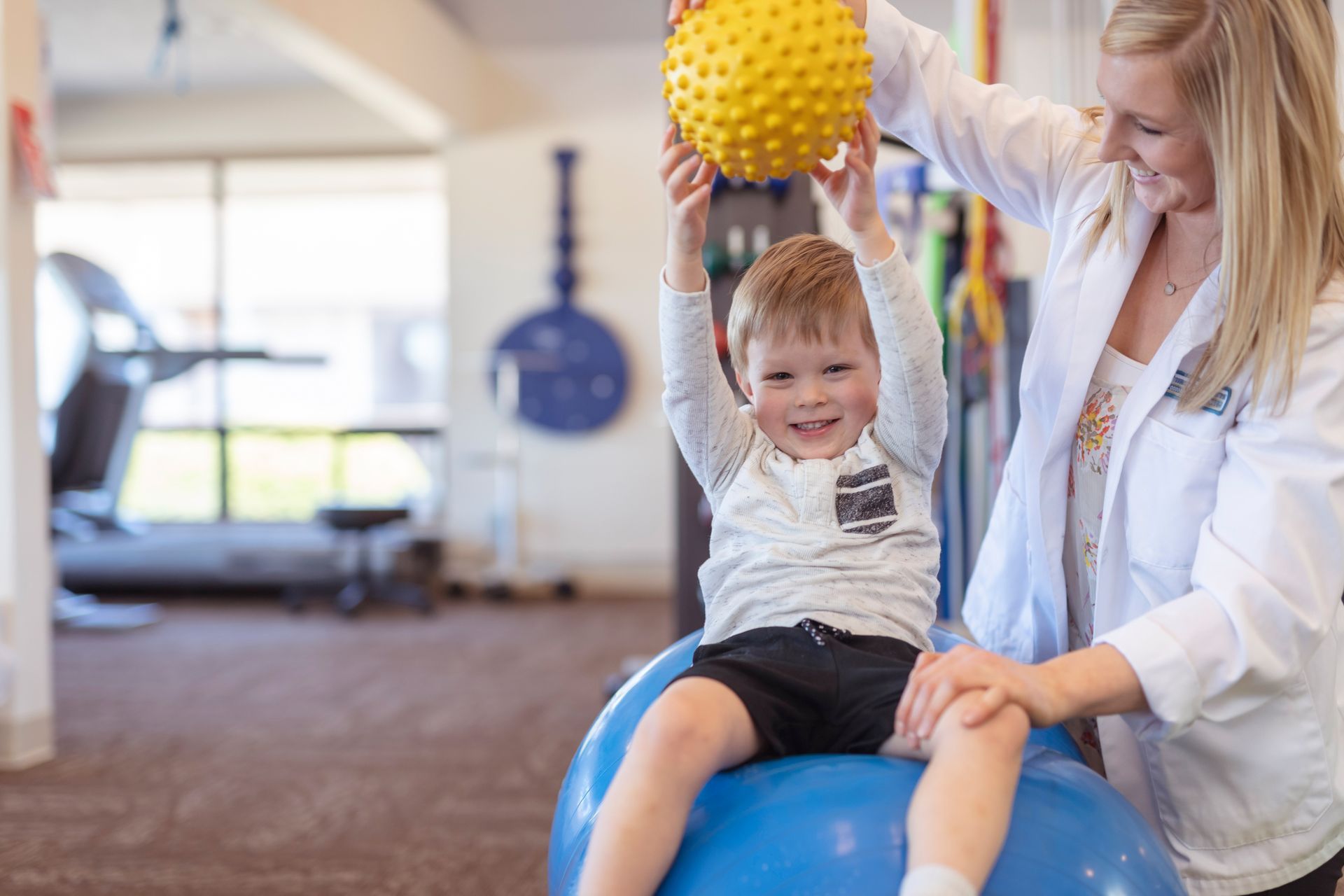
Unlike a typical doctor's visit, pediatric PT sessions are all about play! Therapists use games, activities, and exercises tailored to your child's needs and interests. This might involve:- Building Strength and Coordination: PTs use fun exercises and activities like animal walks, obstacle courses, and games to help children improve their balance, agility, and muscle control. These skills can be essential for everything from playing on the playground to keeping up with friends.
- Addressing Developmental Delays: Physical therapy can be a game-changer for children experiencing delays in reaching milestones like rolling over, crawling, or walking. Your PT will assess your child to identify the areas holding them back and create a fun program to help them develop the necessary skills to progress.
- Recovering from Injuries: Did your little athlete take a tumble? PTs can help kids heal from sports injuries and surgeries. A PT will help your child restore strength and flexibility so they can safely get back to their favorite activities.
- Managing Chronic Conditions: Children with conditions like cerebral palsy or muscular dystrophy can benefit from physical therapy to help manage their symptoms and improve their overall function and well-being. A PT will assess your child to identify areas of strength and areas that need improvement. They will then develop a program to help your child maximize their strength, range of motion, coordination, and endurance. They'll educate you and your child on things you can work on at home. They can also help get your child any needed equipment like wheelchairs, braces, or walkers.
Benefits Beyond Movement
Physical therapy isn't just about physical health. While physical therapists play an important role in promoting physical activity and health in kids, PTs can also help children with:- Self-Confidence: As kids gain strength, coordination, and independence, their confidence soars. This can have a positive impact on all areas of their lives.
- Pain Management: PTs can teach children techniques to manage pain and discomfort, improving their overall quality of life.
- Socialization: Gross motor skills help children participate in play and games with peers, which help children develop social skills and build friendships.
If you think your child might benefit from physical therapy, talk to your pediatrician or call your PT. They can assess your child's needs and create a personalized plan to help them reach their goals!
References
- The Scope of Pediatric Physical Therapy Practice in Health Promotion and Fitness for Youth With Disabilities. Pediatric Physical Therapy 27(1):p 2-15, Spring 2015. | DOI: 10.1097/PEP.0000000000000098 https://journals.lww.com/pedpt/Fulltext/2015/27010/The_Scope_of_Pediatric_Physical_Therapy_Practice.2.aspx
- Aquatic Physical Therapy for Children with Developmental Coordination Disorder: A Pilot Randomized Controlled Trial, Physical & Occupational Therapy In Pediatrics, 30:2, 111-124, DOI: 10.3109/01942630903543575
- Physical Therapy Management of Congenital Muscular Torticollis: An Evidence-Based Clinical Practice Guideline. Pediatric Physical Therapy 25(4):p 348-394, Winter 2013. | DOI: 10.1097/PEP.0b013e3182a778d2 https://journals.lww.com/pedpt/Fulltext/2013/25040/Physical_Therapy_Management_of_congenital_muscular.2.aspx
- Pain Assessment and Management in Children With Neurologic Impairment: A Survey of Pediatric Physical Therapists. Pediatric Physical Therapy 22(3):p 330-335, Fall 2010. | DOI: 10.1097/PEP.0b013e3181ea8d7d https://journals.lww.com/pedpt/FullText/2010/22030/Pain_Assessment_and_Management_in_Children_With.18.aspx
Articles/Content:
- 5 Ways to increase physical activity in infants and toddlers https://www.choosept.com/health-tips/5-ways-increase-physical-activity-infants-toddlers
- Activities to Promote Development in Children https://www.choosept.com/childrens-activities
- Whole Body Exercises for Kids of all Abilities https://www.choosept.com/video/whole-body-exercises-kids-all-abilities

By Emily Herndon
•
March 14, 2026
When someone starts physical therapy, they often say their goal is simple: “I just want to get better.” But if you ask ten people what “better” means, you will probably get ten different answers. For one person, recovery might mean running a local 5K again. For another, it might mean gardening without back pain, casting a fishing line at the river, or simply picking up a grandchild without discomfort. At Plains Physical Therapy, we believe physical therapy is about more than just healing an injury. It’s about helping you return to the life and activities that matter most to you. HEALING IS MORE THAN CLINICAL MEASUREMENTS Physical therapists are trained to focus on the clinical side of recovery, including: Reducing inflammation Improving range of motion Building strength and balance Restoring mobility The real goal of physical therapy isn’t just to improve numbers on a chart — it’s to help you return to the activities that define your daily life. YOU ARE THE MOST IMPORTANT MEMBER OF YOUR CARE TEAM Your physical therapist brings clinical expertise. But you are the expert on your life. That’s why the best physical therapy outcomes happen when recovery becomes a partnership between patient and therapist. HOW YOU CAN HELP GUIDE YOUR RECOVERY Identify Your 'North Star' Think about one activity your injury is preventing you from doing. This becomes the guiding goal for your treatment plan. Examples might include hiking, gardening, playing pickleball or golf, sleeping comfortably through the night, or lifting your children or grandchildren. Share the Small Details Sometimes the most helpful information comes from everyday moments — like knee pain when going downstairs, neck stiffness after computer work, or shoulder pain reaching overhead. These details help your therapist design exercises that mimic real-world movements. Write Down Your Goals Before Your Appointment Before your first visit, write down three things you want to do again without pain. Bringing this list to your evaluation helps make therapy a collaborative plan. MOTIVATION MATTERS IN RECOVERY Sticking with a home exercise program can sometimes feel repetitive. But when every exercise connects to a meaningful goal — like returning to the golf course, gardening again, or walking without pain — it becomes much easier to stay motivated. PHYSICAL THERAPY IS A PARTNERSHIP At Plains Physical Therapy, we believe recovery works best when your treatment plan reflects your life, your goals, and your priorities. Your therapy should be as unique as you are. Because getting stronger is great — but getting back to the activities that make life meaningful is even better. Ready to start your recovery? Contact Plains Physical Therapy to schedule an evaluation and begin a personalized treatment plan designed around the goals that matter most to you.

September 14, 2025
Stay Steady: Tips for Fall Prevention Month September is Fall Prevention Month, and it’s the perfect time to shine a light on a serious but often overlooked issue. Every year, 1 in 4 adults over age 65 experiences a fall, and about 1 in 5 of those falls causes serious injuries like broken bones or head trauma. But here’s the good news: while falls are common, they are not an inevitable part of aging. With the right strategies—exercise, home safety changes, and professional support—you can stay steady, confident, and independent. Build Strength to Protect Yourself Your legs are your foundation for stability, but as we age, muscle naturally declines without resistance training. That weakness directly increases fall risk. The solution? Strengthen your lower body with activities like: Walking or hiking Water exercise (great for joints) Resistance bands or light weights Bodyweight moves like squats and lunges Stair climbing �55357;�56393; A physical therapist can design a safe, personalized program to target the exact muscles that keep you upright and steady. Balance Training: Use It or Lose It Balance isn’t just something you “have”—it’s a skill that can fade if you don’t challenge it. Practicing balance regularly can dramatically reduce fall risk. Try these simple exercises (with support nearby): Single-leg stands: hold 10–30 seconds per side Stand with eyes closed: 10–15 seconds Chair rises: stand up without using your hands Heel-to-toe walking: walk in a straight line ⚠️ Always practice near a counter or sturdy chair, and stop if you feel dizzy or unsafe. Make Your Home Safer Many falls happen right where you live. A few simple tweaks can make your home much safer: Add night lights in hallways and bathrooms Remove loose rugs and clutter Keep cords and cables out of walkways Install grab bars in bathrooms Store frequently used items within easy reach Don’t Forget Vision & Medications Your eyes and your prescriptions can play a big role in your stability. Schedule regular eye exams to catch vision changes. Ask your doctor or pharmacist to review medications—especially if you feel dizzy, drowsy, or unsteady. When to See a Physical Therapist If you’ve noticed unsteadiness, or if you’ve already had a fall, now’s the time to see a PT. We can: Assess your balance and strength Build a customized exercise program Teach fall-prevention strategies Partner with your doctor or pharmacist to address vision or medication issues The Bottom Line Falls are common, but they don’t have to define aging. By strengthening your legs, practicing balance, and creating a safer home environment, you can stay steady, active, and independent. This Fall Prevention Month, take one small step toward better balance—you’ll thank yourself later. �55357;�56525; Plains Physical Therapy is here to help. Call us today at 406-826-4383 to schedule a fall risk assessment and get a personalized plan to keep you safe and strong. Resources Exercise for falls and fracture prevention in long term care facilities: a systematic review and meta-analysis. J Am Med Dir Assoc. 2013;14(9):685-689.e2. a. https://pubmed.ncbi.nlm.nih.gov/23860265/ Preventing Falls in Older Persons. Am Fam Physician. 2017 Aug 15;96(4):240-247. PMID: 28925664. a. https://pubmed.ncbi.nlm.nih.gov/28925664/ The Effectiveness of Physical Therapist–Administered Group-Based Exercise on Fall Prevention: A Systematic Review of Randomized Controlled Trials. Journal of Geriatric Physical Therapy 36(4):p 182-193, October/December 2013. a. https://journals.lww.com/jgpt/fulltext/2013/10000/the_effectiveness_of_physical.5.aspx?casa_token=r5fLfvxztA0AAAAA:9yaeibFmZiCeIZiQcSOVcbWkWpA_8spTG-bNT2UFa-D2Dc7tljHsv3VW5XfmnvIySLNwrJDd7aqnJTsfdHmRqK8 Exergame technology and interactive interventions for elderly fall prevention: A systematic literature review a. https://www.sciencedirect.com/science/article/abs/pii/S0003687016302265 Articles/Content: Physical Therapy Guide to Falls https://www.choosept.com/guide/physical-therapy-guide-falls Fall Prevention Starts with a Conversation https://www.ncoa.org/article/falls-prevention-conversation-guide-for-caregivers Balance and Falls https://www.apta.org/patient-care/public-health-population-care/balance-and-falls

April 7, 2025
Physical Therapists Offer Cutting-Edge Solutions to Workplace Discomfort and Injury Prevention Physical therapists are emerging as key players in workplace health, providing innovative ergonomic solutions that dramatically reduce workplace injuries and improve employee well-being across industries. Workplace-related pain and discomfort are increasingly recognized as significant challenges for employers and employees alike. PTs are now taking a proactive approach, designing comprehensive workplace wellness strategies that address everything from manufacturing floor dynamics to office ergonomics. The goal is to transform how businesses think about workplace health. Physical therapists no longer want to just treat injuries - they're working with businesses to prevent them by creating work environments that support human physiology. Key Workplace Wellness Strategies Include: Comprehensive workstation assessments Customized movement and flexibility programs Ergonomic equipment recommendations Posture and body mechanics training For desk-based workers, PTs are highlighting critical interventions to combat the health risks associated with prolonged sitting. Common issues like neck stiffness, lower back pain, and repetitive strain injuries can be significantly mitigated through targeted interventions. Employees can start today by: Taking frequent short breaks Performing in-chair stretches Optimizing workstation setup For employers, physical therapists recommend: Investing in ergonomic assessments Providing employee movement training Creating flexible work environments that prioritize physical health Businesses interested in reducing workplace injuries and improving employee productivity are encouraged to consult with a physical therapist who specializes in workplace ergonomics.